
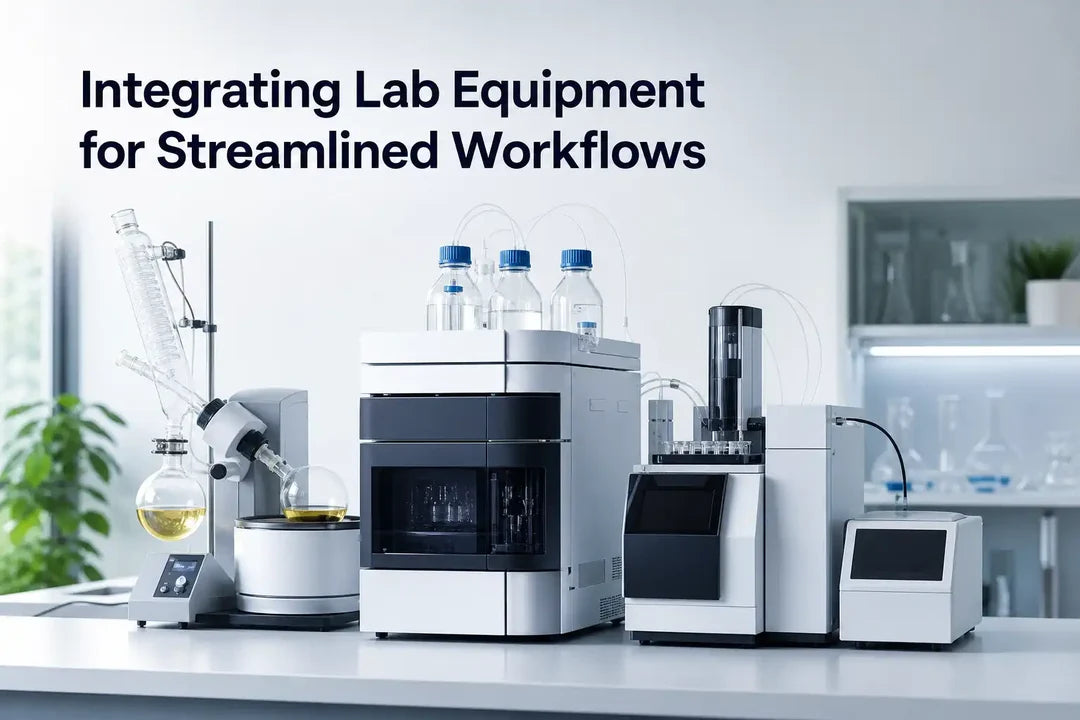
Overview
Integrating lab equipment is crucial for boosting efficiency and accuracy in laboratory operations. By automating processes and optimizing workflows, labs can significantly reduce errors and save time, allowing personnel to focus on critical research tasks. Assessing your current setup and choosing compatible, scalable equipment will pave the way for seamless integration and enhanced productivity.
Table of Contents
- Understanding the Importance of Integration
- Benefits Checklist for Equipment Integration
- Assessing Your Current Lab Setup
- Identifying Bottlenecks
- Evaluating Equipment Compatibility
- Considering Space and Resource Constraints
- Self-Assessment Questionnaire for Lab Setup
- Choosing the Right Equipment for Integration
- Look for Equipment with Compatible Interfaces
- Consider Modular Systems for Flexibility
- Evaluate the Scalability of the Equipment
- Implementing Integrated Systems
- Plan the Integration Process Carefully
- Train Staff on New Systems and Workflows
- Monitor and Adjust Processes as Needed
- Maintaining Integrated Lab Equipment
- Regular Maintenance Prevents Downtime
- Document Maintenance Schedules and Procedures
- Incorporate Feedback from Staff for Continuous Improvement
- Case Studies of Successful Integration
- Example 1: Research and Development Laboratory
- Example 2: Quality Control Laboratory
- Example 3: Educational Research Laboratory
- Future Trends in Lab Equipment Integration
- Increased Automation and AI in Lab Processes
- Integration of IoT Devices for Real-Time Monitoring
- Sustainability Considerations in Equipment Choices
Key Takeaways
- Integration is essential for operational efficiency: Combining lab instruments reduces errors and optimizes workflows.
- Automate to minimize manual errors: Linking equipment to data management systems ensures accurate readings and reduces transcription mistakes.
- Evaluate your current lab setup: Identify bottlenecks and assess equipment compatibility before integration.
- Choose equipment with compatible interfaces: Ensure new devices can communicate seamlessly with existing systems.
- Modular systems offer flexibility: They allow for easy upgrades and maintenance without disrupting the entire lab setup.
- Regular maintenance is crucial: Scheduling routine checks prevents unexpected downtime and enhances reliability.
- Stay updated on future trends: Embrace automation, IoT, and sustainability to maintain a competitive edge in lab operations.
Integrating lab equipment is essential for enhancing operational efficiency in any laboratory setting. By combining various instruments and systems, laboratories can reduce errors, optimize workflows, and improve data management. This article explores the significance of integration and provides practical steps for assessing your current lab setup, ensuring you are equipped to make informed decisions that elevate your laboratory's productivity.
Understanding the Importance of Integration
In today's fast-paced research and development environments, the integration of lab equipment is not just a convenience; it is a necessity. Here are some compelling reasons why:
- Reduction of Manual Errors: Automating processes and linking equipment minimizes the chances of human error. For instance, a glass reactor that connects directly to a data management system can ensure accurate readings and reduce transcription mistakes.
- Time and Resource Savings: Streamlined workflows mean that tasks that once took hours can be completed in a fraction of the time, allowing lab personnel to focus on more critical research activities rather than administrative tasks.
- Enhanced Data Management: Integrated systems often come equipped with advanced data management capabilities, allowing for easy analysis and reporting, which is crucial for making informed decisions quickly.
Benefits Checklist for Equipment Integration
Consider the following checklist to highlight the benefits of integrating your lab equipment:
- Reduced operational costs
- Improved accuracy and reliability
- Faster turnaround times for experiments
- Greater flexibility to adapt to changing research needs
- Increased collaboration among team members through shared data
Assessing Your Current Lab Setup
Before diving into integration, it's crucial to assess your existing lab setup. This evaluation will help identify areas for improvement and determine the best path forward.
Identifying Bottlenecks
Start by analyzing your current processes to pinpoint bottlenecks that slow down workflows. Ask yourself:
- Are there repetitive manual tasks that could be automated?
- Where do delays typically occur in the workflow?
- How does the current setup affect overall productivity?
Evaluating Equipment Compatibility
Next, assess the compatibility of your existing lab equipment. Consider the following:
- Do your current instruments have the ability to communicate with one another?
- Are there existing software solutions that can integrate with your hardware?
- Is there a need for new equipment that can bridge gaps in your setup?
Considering Space and Resource Constraints
Space and resources can significantly affect integration efforts. Evaluate your lab's layout and capacity:
- Is there enough physical space to accommodate new equipment?
- Do you have the budget for additional tools or software?
- How will integration impact your current workflow layout?
Self-Assessment Questionnaire for Lab Setup
To streamline your assessment, consider using the following self-assessment questionnaire:
| Question | Response (Yes/No) |
|---|---|
| Are there tasks that require excessive manual input? | |
| Is your data management system outdated or inefficient? | |
| Do you frequently encounter equipment downtime? | |
| Is collaboration among team members hindered by data silos? | |
| Can your current setup adapt to new research demands? |
By answering these questions, you can better understand your current lab environment and identify areas that need improvement. This assessment will lay the groundwork for effective integration strategies that enhance productivity and efficiency.
Choosing the Right Equipment for Integration
In the quest for a more efficient laboratory, selecting the right equipment for integration can make a significant difference. The aim is to create a cohesive system that enhances productivity and accuracy. Here are some key criteria to consider when choosing lab equipment that integrates well:
Look for Equipment with Compatible Interfaces
Compatibility is crucial for effective integration. Ensure that the new equipment can communicate seamlessly with your existing systems. This might involve:
- Checking for standardized communication protocols such as USB, Ethernet, or wireless capabilities.
- Ensuring that software platforms are compatible, allowing for easy data transfer and management.
- Verifying that devices can be controlled from a central interface, minimizing the need for multiple software applications.
Consider Modular Systems for Flexibility
Modular systems are designed to be adaptable. They allow for the addition or removal of components without disrupting the entire setup. This flexibility can be particularly beneficial in a dynamic lab environment where needs may change. Consider the following:
- Modular equipment can often be upgraded to accommodate new technologies or processes.
- They typically allow for easier maintenance, as individual modules can be serviced without affecting the entire system.
- Scalability is easier, as you can expand your capabilities incrementally.
Evaluate the Scalability of the Equipment
When selecting lab equipment, think long-term. The ability to scale your operations as your research progresses is vital. Look for equipment that:
- Can handle increased workload without compromising performance.
- Offers options for additional features or capabilities as your requirements evolve.
- Is designed with future technologies in mind, ensuring longevity and relevance in a rapidly changing field.
Here’s a quick comparison table to summarize the features you should look for in lab equipment:
| Feature | Importance | Examples |
|---|---|---|
| Compatible Interfaces | Ensures seamless communication between devices | USB, Ethernet, Wireless |
| Modular Design | Allows for flexibility and easy upgrades | Modular reactors, interchangeable components |
| Scalability | Supports future growth and increased demands | Expandable systems, upgradeable software |
Implementing Integrated Systems
Once you have selected the right equipment, the next step is to implement integrated systems effectively. This process requires careful planning and execution to ensure that all components work harmoniously together. Here’s how to get started:
Plan the Integration Process Carefully
A well-thought-out plan is essential for successful integration. Begin by:
- Mapping out the existing workflows to identify where integration will have the most impact.
- Establishing clear objectives for what you want to achieve through integration.
- Creating a timeline that outlines milestones and deadlines for the integration process.
Train Staff on New Systems and Workflows
Training is crucial for ensuring that your team can effectively use the integrated systems. Consider the following steps:
- Conduct training sessions that focus on the new equipment and software.
- Provide hands-on experience to build confidence in using the systems.
- Encourage feedback from staff to identify areas for further training or clarification.
Monitor and Adjust Processes as Needed
After implementation, continuous monitoring is key to ensuring that the integrated systems function as intended. Here’s how to maintain effectiveness:
- Regularly assess the performance of the integrated systems to identify any issues.
- Gather feedback from staff to understand their experiences and challenges with the new systems.
- Be prepared to make adjustments to workflows or equipment configurations based on performance data and user feedback.
By taking these steps, you’ll foster an environment where integrated lab systems can thrive, leading to enhanced productivity and efficiency.
Maintaining Integrated Lab Equipment
Effective maintenance of integrated lab equipment is essential for ensuring optimal performance and longevity. Regular upkeep not only prevents unexpected downtime but also enhances the reliability of your workflows. Here are some key aspects to consider for maintaining your integrated systems:
Regular Maintenance Prevents Downtime
Scheduling routine maintenance checks can significantly reduce the risk of equipment failures. By proactively addressing potential issues, you can keep your lab running smoothly. Consider the following:
- Establish a maintenance calendar that outlines regular checks for each piece of equipment.
- Utilize checklists to ensure all necessary tasks are completed during each maintenance session.
- Document any repairs or adjustments made to track the history of equipment performance.
Document Maintenance Schedules and Procedures
Having a well-documented maintenance schedule is crucial for accountability and efficiency. Here are some steps to help you create an effective documentation process:
- Use a centralized system to log maintenance activities, including dates, tasks performed, and personnel involved.
- Ensure that all staff members are trained on how to access and update maintenance records.
- Regularly review the documentation to identify patterns or recurring issues that may require additional attention.
Incorporate Feedback from Staff for Continuous Improvement
Engaging your team in the maintenance process can lead to valuable insights and improvements. Encourage open communication regarding equipment performance and maintenance challenges. Here’s how to foster a feedback-rich environment:
- Hold regular meetings to discuss maintenance experiences and gather suggestions from lab personnel.
- Implement a feedback form for staff to report issues or recommend improvements regarding equipment maintenance.
- Recognize and reward contributions from team members who provide actionable feedback that enhances maintenance procedures.
By prioritizing maintenance, your lab can achieve greater efficiency and reliability, ultimately leading to improved productivity.
Case Studies of Successful Integration
Understanding how other laboratories have successfully integrated their equipment can provide valuable insights for your own operations. Here are a few examples showcasing different types of labs and their integration strategies:
Example 1: Research and Development Laboratory
A pharmaceutical R&D lab integrated a glass reactor system with a cold trap for freeze drying to enhance their material processing capabilities. By connecting these systems, they achieved:
- Seamless transfer of materials between the reactor and freeze dryer, reducing manual handling.
- Increased accuracy in temperature control, enabling more consistent results.
- Enhanced recovery of solvents through better integration of the condenser system.
Example 2: Quality Control Laboratory
A quality control lab focused on integrating analytical instruments with their data management systems. This integration led to:
- Real-time data analysis, allowing for faster decision-making.
- Reduced errors in data entry through automated data capture from instruments.
- Improved traceability and compliance reporting, enhancing overall lab efficiency.
Example 3: Educational Research Laboratory
An educational institution integrated various lab equipment to streamline their teaching processes. Their approach included:
- Utilizing modular systems that allowed students to easily switch between different experiments.
- Implementing a user-friendly interface for equipment operation, reducing the learning curve for new students.
- Collecting feedback from students on equipment usability, leading to iterative improvements in the lab setup.
These case studies highlight the diverse strategies employed by different labs to enhance their efficiency through integration. Common challenges faced included initial resistance to change and the need for comprehensive training, but these were mitigated through effective communication and ongoing support.
Future Trends in Lab Equipment Integration
The landscape of laboratory equipment integration is continuously evolving. Staying ahead of emerging trends can help labs maintain their competitive edge. Here are some key trends to watch for:
Increased Automation and AI in Lab Processes
Automation technology is becoming more prevalent in laboratory settings. AI-driven systems can optimize workflows, reduce human error, and enhance data analysis. Consider adopting:
- Automated sample handling systems that facilitate faster processing times.
- AI algorithms for predictive maintenance, helping to foresee equipment failures before they occur.
- Data analysis tools that utilize machine learning to provide deeper insights into experimental results.
Integration of IoT Devices for Real-Time Monitoring
The Internet of Things (IoT) is revolutionizing how labs monitor equipment performance. By incorporating IoT devices, labs can benefit from:
- Real-time status updates on equipment health and performance metrics.
- Remote access capabilities, allowing for monitoring and control from anywhere.
- Automated alerts for maintenance needs or anomalies in equipment function.
Sustainability Considerations in Equipment Choices
As sustainability becomes a priority, labs are increasingly seeking equipment that minimizes environmental impact. This includes:
- Energy-efficient models that reduce utility costs and carbon footprints.
- Equipment designed for easy recycling or responsible disposal at the end of its lifecycle.
- Integration solutions that prioritize waste reduction and resource conservation.
By keeping an eye on these trends, laboratories can not only enhance their operational efficiency but also contribute to a more sustainable future. Embrace the future of lab equipment integration, and watch your workflows transform for the better!
Frequently Asked Questions
1. Why is integrating lab equipment important?
2. What are some benefits of integrating lab equipment?
3. How can I assess my current lab setup for integration?
4. What key criteria should I consider when choosing equipment for integration?
5. What future trends should labs watch for in equipment integration?
Glossary
| Term | Meaning |
|---|---|
| Integration | Combining lab equipment for improved efficiency. |
| Operational Efficiency | Maximizing productivity while minimizing resource use. |
| Bottlenecks | Points in a process that slow down workflow. |
| Data Management | Organizing and handling data for analysis and reporting. |
| Modular Systems | Flexible setups allowing easy upgrades and changes. |
| Scalability | The ability to expand operations as needs grow. |
| Automation | Using technology to perform tasks with minimal human intervention. |
| IoT Devices | Internet-connected devices for real-time monitoring. |
| Feedback Loop | A process for gathering input to improve systems. |
| Maintenance Schedule | A planned timetable for regular equipment upkeep. |
Linked Product

Ai 10L Single or Dual Jacketed Glass Reactor w/ Chiller & Pump
The Ai 10L Single or Dual Jacketed Glass Reactor is designed for precise synthetic reactions, allowing for controlled temperature and vacuum environments. Its adjustable stirring speeds and constant pressure feeding funnel enable uniform material addition, while the built-in condenser facilitates material recovery. The dual jacketed model offers enhanced temperature control and visibility, making it suitable for a wide range of applications in lab settings.
View Product