
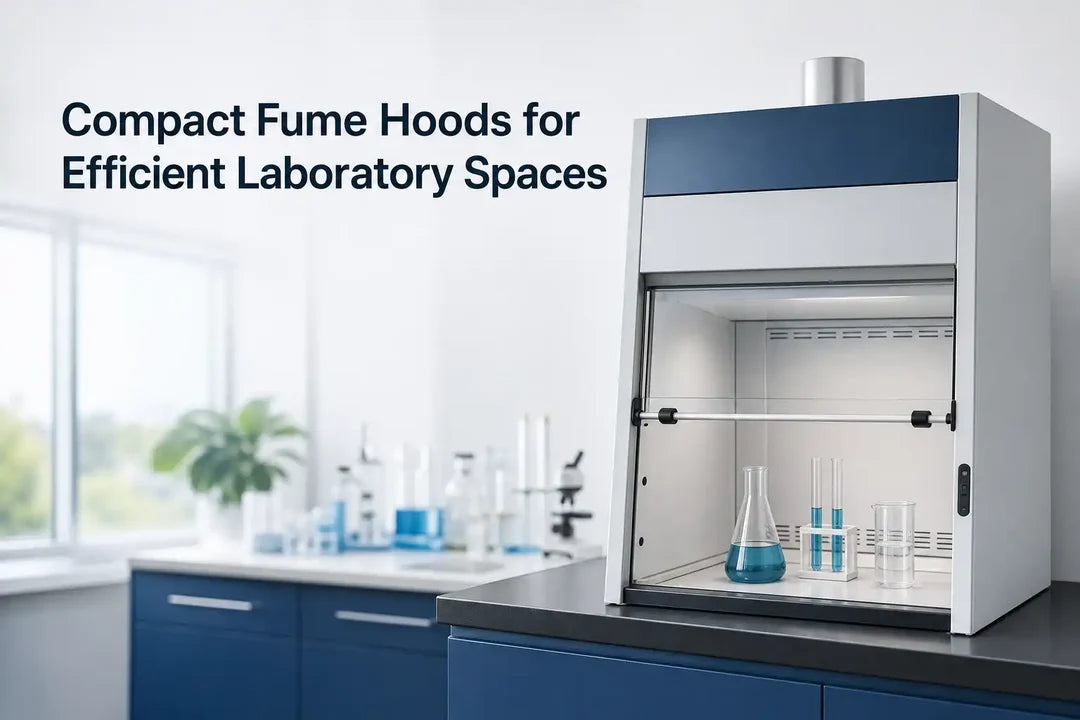
Overview
This article provides an in-depth look at compact fume hoods, emphasizing their critical role in maintaining safety and efficiency in small laboratory environments. Readers will learn about the key features to consider when selecting a fume hood, the importance of compliance with safety standards, and best practices for installation and maintenance. By understanding these aspects, laboratory managers can make informed decisions that enhance both safety and operational effectiveness.
Table of Contents
- Understanding Compact Fume Hoods
- Key Features to Look For
- Size and Dimensions
- Material and Construction Quality
- Ventilation Systems and Airflow Management
- Product Spotlight: Fisher American Fume Hoods
- 3′ Fisher American Fume Hood w/ Acid Cabinets
- 4′ x 4′ Fisher American Fume Hood w/ Acid Cabinets
- 5′ Fisher American Fume Hood w/ ACID & General Storage
- Installation Considerations
- Maintenance Tips for Longevity
- Routine Checks and Cleaning Procedures
- Identifying Signs of Wear and Tear
- When to Call a Professional for Repairs
- Cost Considerations and Budgeting
- Initial Costs vs. Long-term Savings
- Budgeting for Installation and Maintenance
- Potential Funding Options for Labs
- Conclusion and Recommendations
Key Takeaways
- Compact fume hoods are crucial for maintaining safety and air quality in small laboratory environments, particularly in biotech and botanical extraction.
- Ensure compliance with ANSI/ASHRAE 110 standards and local safety regulations when selecting a fume hood.
- Key features to consider include size, material quality, and ventilation systems for optimal airflow management.
- Regular maintenance, including routine checks and airflow testing, is essential for the longevity of compact fume hoods.
- Budgeting should account for installation costs, ongoing maintenance, and potential training for staff on proper usage.
- Explore funding options such as government grants or partnerships with suppliers to support laboratory safety improvements.
- Models like the 5′ Fisher American Fume Hood offer versatile features suitable for diverse laboratory applications.
Comparison at a Glance
| Option | Best for | Strengths | Trade-offs |
|---|---|---|---|
| 3′ Fisher American Fume Hood w/ Acid Cabinets | Tight laboratory spaces | Compact design with essential features like acid storage and adequate workspace. | Limited workspace may not suit larger projects. |
| 4′ x 4′ Fisher American Fume Hood w/ Acid Cabinets | Labs requiring more ventilation | Increased workspace and improved airflow management with sliding sash doors. | Takes up more space than the 3′ model. |
| 5′ Fisher American Fume Hood w/ ACID & General Storage | Versatile laboratory needs | Generous workspace with additional storage for chemicals and supplies. | Higher initial investment and space requirement. |
Compact fume hoods are essential for laboratories aiming to maximize safety and efficiency while conserving space. These specialized ventilation systems protect users from hazardous fumes, vapors, and particulate matter, making them crucial in biotech and botanical extraction settings. Understanding their importance and key features enables laboratory managers and technicians to make informed decisions about their setups.
Understanding Compact Fume Hoods
Compact fume hoods are smaller versions of traditional fume hoods, specifically designed to fit into limited spaces while providing effective ventilation. They are vital for containing hazardous substances and maintaining air quality, especially in smaller laboratories where ventilation options may be restricted.

The significance of ventilation in small spaces cannot be overstated. Without proper airflow management, toxic fumes can accumulate, posing serious health risks to personnel. Compact fume hoods mitigate these risks by drawing in contaminated air and expelling it outside, thus maintaining a safe working environment. Compliance with regulatory standards is also crucial; many jurisdictions require specific airflow rates and safety features in laboratory environments to ensure worker health and safety.
Here’s a checklist of safety standards to consider when evaluating compact fume hoods:
- Ensure the hood meets ANSI/ASHRAE 110 standards for airflow performance.
- Check for compliance with local and national safety regulations.
- Verify that the hood has appropriate sash height and airflow monitoring systems.
- Confirm the presence of adequate emergency shut-off systems and alarms.
Key Features to Look For
When selecting a compact fume hood, several key features enhance functionality and safety, making them suitable for small laboratory spaces. Here are the primary factors to consider:
Size and Dimensions
Compact fume hoods should be appropriately sized for the laboratory space. For instance, the 3′ Fisher American Fume Hood w/ Acid Cabinets offers dimensions of 36″ width and 32″ depth, making it ideal for tight areas. Larger options, such as the 4′ x 4′ Fisher American Fume Hood, provide more workspace while still fitting into limited spaces.
Material and Construction Quality
Durability is key in laboratory equipment. Look for fume hoods constructed from high-quality, chemical-resistant materials to withstand daily use and exposure to various substances, particularly in botanical extraction processes.
Ventilation Systems and Airflow Management
Effective ventilation is critical. Compact fume hoods should feature robust airflow management systems that allow for adjustable sash heights and airflow monitoring. This ensures optimal performance and safety during operation. Models like the 5′ Fisher American Fume Hood w/ ACID & General Storage include advanced ventilation features, making them suitable for diverse applications in the biotech field.
Product Spotlight: Fisher American Fume Hoods
Fisher American Fume Hoods are designed to meet the unique challenges faced by small laboratories, particularly in the biotech and botanical extraction sectors. These compact fume hoods provide a safe working environment while optimizing space without compromising functionality or safety. Here, we’ll explore the features and applications of three models: the 3′ Fisher American Fume Hood w/ Acid Cabinets, the 4′ x 4′ Fisher American Fume Hood w/ Acid Cabinets, and the 5′ Fisher American Fume Hood w/ ACID & General Storage.
3′ Fisher American Fume Hood w/ Acid Cabinets

This model features exterior dimensions of 36″ width, 32″ depth, and a height of 54.5″, making it an ideal choice for tighter laboratory spaces. The work area offers 26.5″ of width and 22.5″ of depth, providing ample room for experiments. Key features include a light switch, AC power plug, and a cold water valve, alongside specialized acid storage. This fume hood is particularly useful in botanical extraction processes where volatile substances may be present, ensuring efficient fume ventilation.
4′ x 4′ Fisher American Fume Hood w/ Acid Cabinets

The 4′ x 4′ model expands the workspace with a width and depth of 48″ while maintaining the same height as the smaller model. It features a vertical sliding sash door with two horizontal sliding glass windows, allowing for easy access and visibility. This fume hood is ideal for labs requiring more extensive ventilation due to higher volumes of chemical handling or botanical extraction, ensuring compliance with safety standards while maximizing efficiency.
5′ Fisher American Fume Hood w/ ACID & General Storage

The largest of the three, the 5′ Fisher American Fume Hood, offers a generous workspace with a width of 60″ and a depth of 32″. This model includes both acid and general storage compartments, making it versatile for various laboratory needs. The additional storage space is beneficial for labs that require a variety of materials for botanical extraction, providing a centralized location for chemicals and supplies. Its design supports efficient workflow while adhering to safety protocols.
Installation Considerations
Installing a compact fume hood requires careful planning to ensure safety and functionality. Here are some key considerations:
- Space Requirements: Assess the available space in your laboratory to determine the best model size. Ensure there is sufficient clearance around the fume hood for ventilation and access.
- Electrical and Plumbing Needs: Most fume hoods require electrical connections for lighting and power outlets, as well as plumbing for cold water valves. Plan the installation to accommodate these requirements.
- Safety Measures: Follow local safety regulations and standards during installation. This includes securing the fume hood to the floor and ensuring proper ventilation connections are made to prevent hazardous fumes from escaping into the workspace.
For a successful installation, consider creating a step-by-step guide that outlines the entire process, ensuring that all safety protocols are followed and that the fume hood operates efficiently from day one. This attention to detail will enhance the longevity and performance of your equipment, making it a valuable asset in your laboratory.
Maintenance Tips for Longevity
Regular maintenance of compact fume hoods is crucial to ensure their effectiveness and longevity. These essential pieces of laboratory equipment require routine checks and cleaning to maintain optimal performance and safety. Below are some key maintenance tips:
Routine Checks and Cleaning Procedures
Establish a regular maintenance schedule that includes the following:
- Visual Inspections: Regularly check for any visible signs of damage or wear, especially on the sash, seals, and ductwork.
- Cleaning: Clean the interior surfaces with appropriate non-corrosive cleaners to prevent buildup of hazardous materials.
- Airflow Testing: Conduct airflow tests to ensure the fume hood is providing adequate ventilation. This is critical for safety in laboratories handling volatile substances.
Identifying Signs of Wear and Tear
Being proactive in identifying issues can prevent costly repairs or replacements. Look out for:
- Inconsistent Airflow: If airflow appears weaker than usual, it may indicate a blockage or malfunction.
- Damaged Sash: A sash that doesn’t close properly can compromise safety and efficiency.
- Corrosion: Any signs of rust or corrosion should be addressed immediately to prevent further damage.
When to Call a Professional for Repairs
Some maintenance tasks may require professional assistance. Consider contacting a qualified technician if you notice:
- Persistent airflow issues despite cleaning and adjustments.
- Electrical problems, such as malfunctioning lights or power outlets.
- Structural issues, including cracks in the fume hood body or sash.
Cost Considerations and Budgeting
Understanding the financial aspects of purchasing and maintaining a compact fume hood is vital for laboratory managers. Here are some key considerations:
Initial Costs vs. Long-term Savings
While the initial investment in a compact fume hood can be significant, it is important to view it as a long-term asset. Quality fume hoods, such as the 3′ Fisher American Fume Hood w/ Acid Cabinets and the 4′ x 4′ Fisher American Fume Hood w/ Acid Cabinets, provide enhanced safety features that can prevent costly accidents and health hazards. Investing in durable and efficient units can lead to savings in maintenance and potential liability costs.
Budgeting for Installation and Maintenance
When budgeting for a fume hood, consider the following:
- Installation Costs: Include expenses for plumbing and electrical work necessary to meet the fume hood’s operational requirements.
- Maintenance Budget: Set aside funds for regular maintenance checks and potential repairs to ensure the fume hood remains in optimal condition.
- Training Costs: Allocate resources for training staff on proper use and maintenance of the fume hood.
Potential Funding Options for Labs
Many laboratories can benefit from grants or funding options specifically for safety equipment. Consider exploring:
- Government grants for lab safety improvements.
- Institutional funds allocated for equipment upgrades.
- Partnerships with suppliers that offer financing options for laboratory equipment.
Conclusion and Recommendations
Choosing the right compact fume hood is essential for ensuring safety and efficiency in small laboratory spaces. Evaluate your specific needs, the layout of your lab, and compliance with safety standards. Regular maintenance and budgeting for installation can enhance the longevity of your investment.
As you explore options, consider models like the 5′ Fisher American Fume Hood w/ ACID & General Storage that offer versatile features suitable for various applications in biotech and botanical extraction. Balancing safety, functionality, and budget will lead to a well-equipped and compliant laboratory.
Frequently Asked Questions
1. What is a compact fume hood?
2. Why are compact fume hoods important in small laboratories?
3. What key features should I look for in a compact fume hood?
4. What are some maintenance tips for compact fume hoods?
5. What are the cost considerations when purchasing a compact fume hood?
Glossary
| Term | Meaning |
|---|---|
| Compact Fume Hood | A smaller version of traditional fume hoods for limited spaces. |
| Ventilation System | A system designed to manage airflow and expel hazardous fumes. |
| ANSI/ASHRAE 110 | Standards for measuring airflow performance in fume hoods. |
| Sash Height | The height of the transparent panel that protects users from fumes. |
| Airflow Monitoring | Systems that track the airflow levels within the fume hood. |
| Emergency Shut-off | A system that quickly stops the fume hood operation in emergencies. |
| Chemical-resistant Material | Durable materials that withstand exposure to hazardous substances. |
| Routine Maintenance | Regular checks and cleaning to ensure fume hood effectiveness. |
| Airflow Testing | Tests conducted to ensure adequate ventilation is maintained. |
| Budgeting | Planning financial resources for purchase and maintenance of fume hoods. |